LVT herringbone flooring for Warrington open-plan knock-throughs: running the pattern seamlessly across rooms
LVT herringbone flooring fitted in Warrington and across Cheshire. We explain the pattern, glue-down method and subfloor prep that make it last.
What makes LVT herringbone flooring worth considering
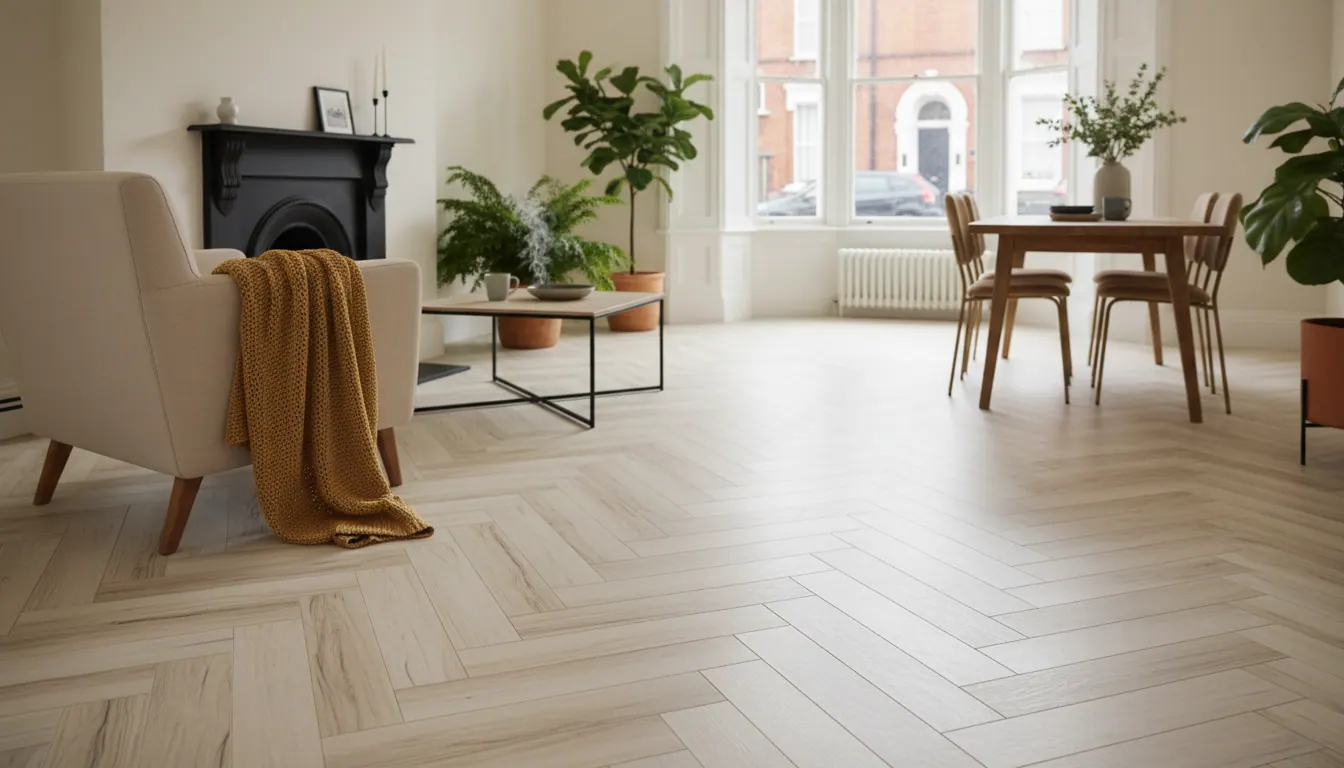
Herringbone is one of those patterns that has never really gone out of fashion. Lay the planks at 45 degrees in that interlocking zigzag and the floor immediately has depth and movement, whether it is in a Victorian terrace in Latchford or a new-build in Chapelford. The difference now, compared to the traditional timber versions, is that luxury vinyl tile gives you that same visual impact with a core that handles the realities of North West living: damp subfloors, underfloor heating, busy households, and the kind of foot traffic that would ruin a softer floor inside a year.
We fit LVT herringbone throughout Warrington and the surrounding area of Cheshire, in homes, offices and commercial premises. This article explains what the product actually is, why the installation method matters more than most people realise, and how to know whether your room and your subfloor are ready for it.
LVT herringbone: what it is and how it differs from other options
Luxury vinyl tile is a multi-layer product. There is a rigid or semi-rigid core, a photographic layer that replicates the look of timber or stone, and a wear layer on top that protects against scratches and scuffs. The wear layer thickness varies by product, and for a busy hallway or a commercial space it is worth specifying a thicker one.
Herringbone LVT comes in individual planks cut to fit the pattern, not in a click-lock sheet. The planks are typically narrower and shorter than standard LVT planks, which is what creates the tight, defined zigzag.
How does it compare to laminate? Laminate is a wood-fibre board with a printed top layer. It looks similar at a distance but it is not waterproof, it can swell at the edges if moisture gets in, and it does not tolerate the minor movement that old floors in Warrington terraces tend to have. LVT is fully waterproof, dimensionally stable, and far more forgiving of the subfloor conditions you find in older North West properties. For hallways, kitchens and open-plan spaces, LVT simply performs better over time. We have a more detailed comparison in our article on LVT vs. carpet for Warrington hallways: which wears better under muddy boots and heavy traffic.
Glue-down versus click-fit for herringbone
This is the question we get asked most often about LVT herringbone, and the answer matters practically.
Click-fit LVT locks together and floats over the subfloor. It works well for standard plank layouts and is quicker to fit. For herringbone, though, click-fit can be limiting. The angled cuts and the tight geometry of the pattern mean that a floating floor has more opportunity to move slightly at the joints over time, which can open up the pattern and catch the eye in exactly the wrong way.
Glue-down LVT herringbone is bonded directly to the subfloor with a pressure-sensitive adhesive. Every plank is fixed. The result is a floor that feels solid underfoot, holds the pattern precisely, and does not flex or creak. It is the method we use for most herringbone installations because the finish is simply better.
The trade-off with glue-down is that the subfloor has to be right before a single plank goes down. Any lump, hollow or crack will telegraph through the vinyl over time. That brings us to the part of the job that most people do not see.
Why subfloor preparation decides the result
We never cut corners when it comes to preparation. That is not a marketing line; it is just the reality of how LVT herringbone behaves.
Glue-down LVT is typically 2.5mm to 5mm thick. It is not thick enough to bridge imperfections. A subfloor with ridges from old adhesive, a concrete slab with a dip in the middle, or a timber floor with boards that flex will all show through the finished surface within months.
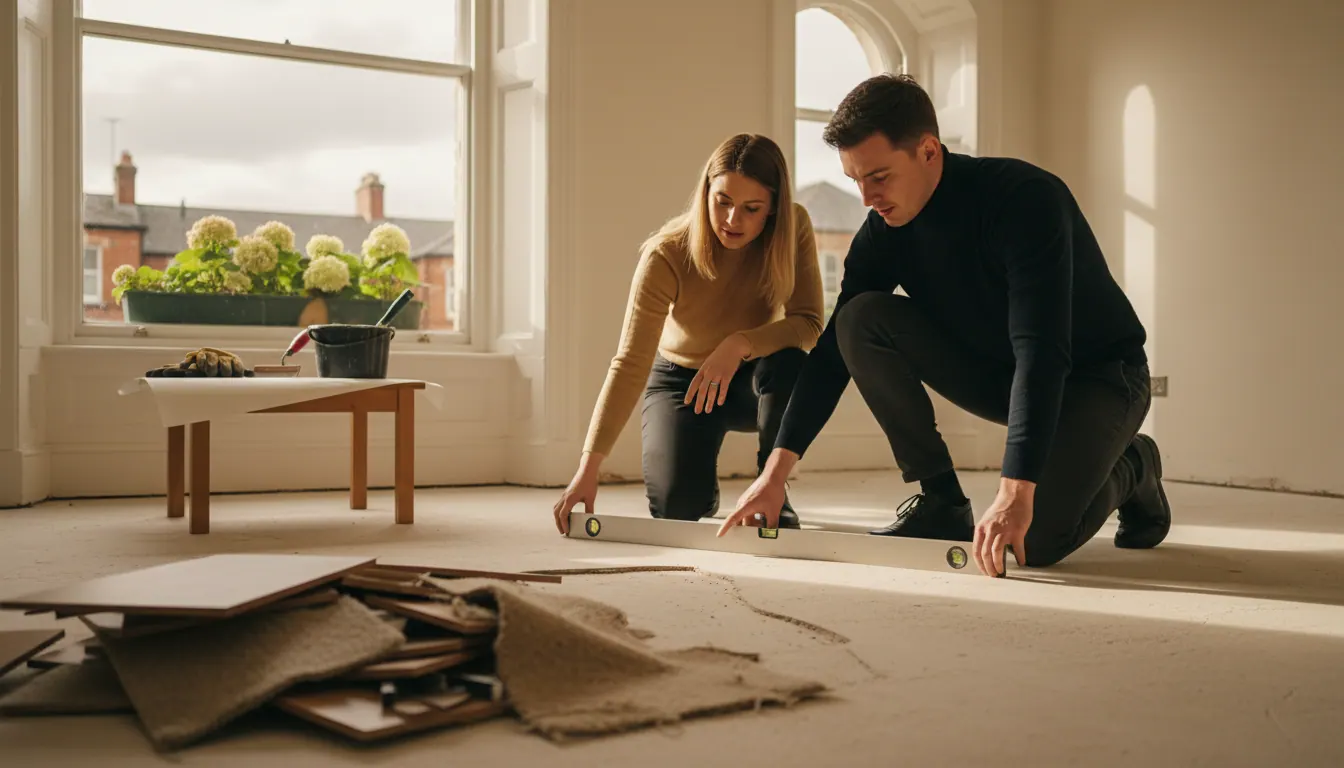
Before we lay any LVT herringbone, we assess the subfloor and address what needs addressing. On concrete, that usually means grinding down high spots and filling low areas with a floor-levelling compound. On timber, it can mean ply boarding to create a stable, even surface. Neither step is glamorous, but both are what separates a floor that looks sharp in five years from one that starts to lift at the edges by year two.
If you want more detail on this stage of the process, our article on floor levelling in Warrington: why uneven subfloors cause LVT and carpet to fail, and how to fix it before fitting goes into the specifics.
Setting out the herringbone pattern: why it has to start from the centre
This is the part of an LVT herringbone installation that separates a careful fitter from a rushed one.
The herringbone pattern has to be set out from the centre of the room, not from a wall. If you start from a wall, the cut pieces at the far end will be random slivers, and the pattern will look as though it has drifted. Starting from a centre line means the pattern is balanced, the cuts at each edge are equal, and the eye reads the room as intentional.
In a rectangular room, this is straightforward. In an L-shaped open-plan space, a room with a bay window, or a hallway that turns a corner, the setting-out requires more thought. We plan it before the first plank goes down, because adjusting it afterwards is not really an option with a glue-down floor.
Colour and finish choices also affect how the pattern reads. A natural oak tone in a lighter finish will emphasise the zigzag. A darker, more uniform tone will let the texture do the work rather than the contrast. We give honest advice on both and will tell you plainly if a particular choice is going to look busy in a smaller room.
Where LVT herringbone works well in Warrington homes and commercial spaces
Hallways and open-plan living areas. The pattern suits a long hallway well because the diagonal draws the eye along the space. In a 1930s semi in Grappenhall or Orford, it can give a traditional feel without the maintenance demands of real timber.
Kitchens and kitchen-diners. LVT is fully waterproof, so spills and splashes are not a concern. The herringbone pattern adds visual interest in a room that often has a lot of competing elements.
Commercial premises. Offices, reception areas and retail spaces in Warrington town centre and across Cheshire increasingly use LVT herringbone for the same reason domestic customers do: it looks considered, it wears well, and it is practical to maintain. For commercial settings with higher footfall, specifying a thicker wear layer is important.
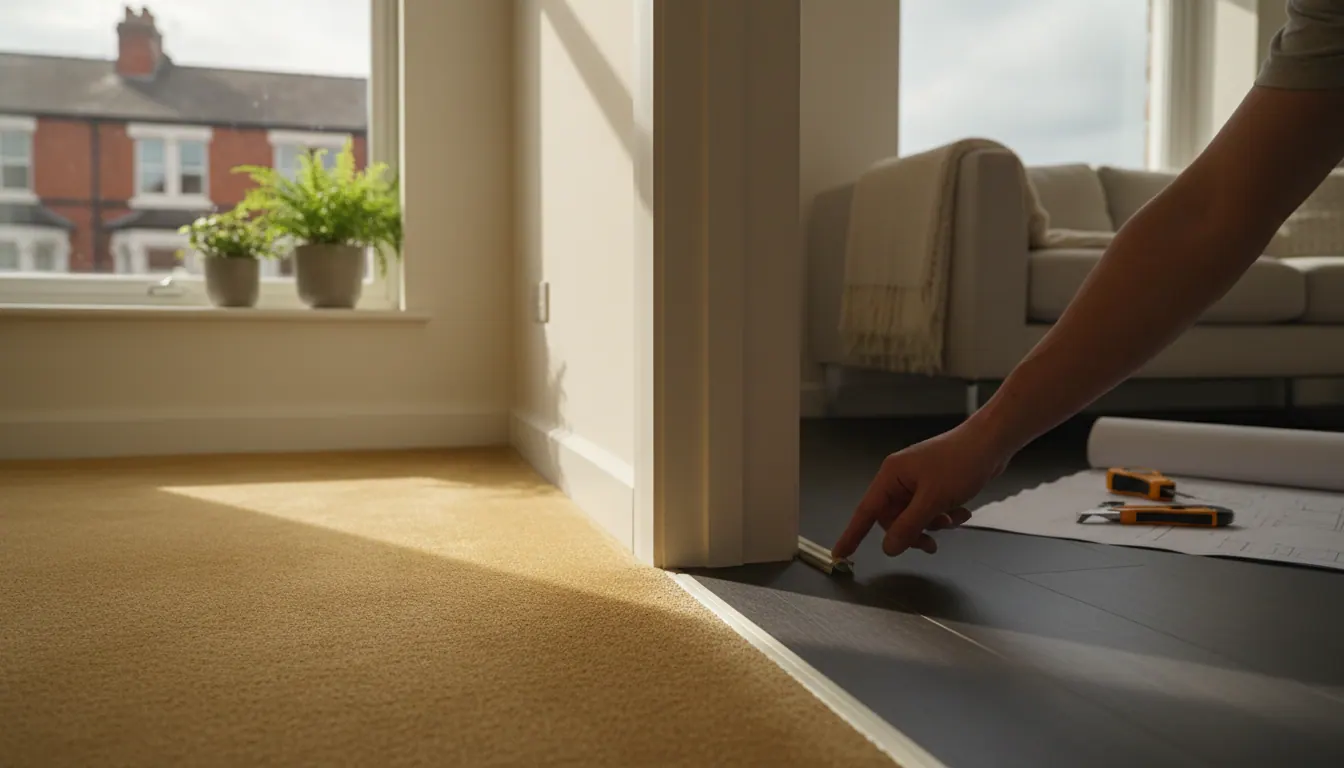
Extensions and knock-throughs. When a wall comes down and two rooms become one, the flooring has to run through the space without a break. LVT herringbone handles this well because the pattern naturally draws the eye across the join rather than stopping at it.
What one of our customers said
We fit a lot of floors and we let the work speak for itself. But it is always good to hear directly from people we have worked for.
Amazing work as always off Harry & Cliff. Perfectionists and so quick! Would always always use them and highly recommend! Couldn't be happier with our new flooring we love it so much.
Jessica Ledwith
The word "perfectionists" is the one that stays with us. With a pattern like herringbone, where every plank has to sit at exactly the right angle and the setting-out has to be right from the start, that precision is not optional. It is the job.
Caring for your LVT herringbone floor
LVT is low-maintenance by nature, but a few simple habits will keep it looking its best.
- Sweep or vacuum regularly to remove grit, which is the main cause of surface wear over time.
- Damp mop with a pH-neutral cleaner. Avoid anything solvent-based or highly alkaline.
- Do not use steam mops. The heat and moisture can affect the adhesive bond on a glue-down floor and may damage the wear layer.
- Fit felt pads under furniture legs to prevent indentation.
- Use a good entrance mat at external doors to reduce the amount of grit and moisture tracked in, especially in a North West winter.
Frequently asked questions
Is LVT herringbone flooring a good choice for everyday use? Yes, provided it is fitted correctly. The wear layer on a quality LVT plank is highly resistant to scratches and scuffs, and the core is fully waterproof. The herringbone pattern itself does not affect durability. What affects durability is the subfloor preparation and the quality of the installation. A properly prepared, glue-down LVT herringbone floor will perform well in busy family homes and commercial spaces alike.
What are the downsides of glue-down LVT flooring? The main one is that it is not easy to remove if you change your mind later. The adhesive bonds the planks firmly to the subfloor, which is what makes it perform so well, but it does mean the floor is not as simple to lift as a click-fit product. The other consideration is subfloor preparation: a glue-down floor requires a flatter, more consistent subfloor than a floating floor. Neither of these are reasons to avoid it; they are just things to factor in before you start.
Is LVT better than laminate for older Warrington properties? For most North West homes, yes. Laminate is vulnerable to moisture at the edges and joints, which is a real concern in older properties where subfloors can be slightly damp or uneven. LVT is waterproof, more dimensionally stable, and handles the minor movement that older floors can have. In a Victorian terrace or a 1930s semi, LVT is generally the more sensible long-term choice.
How do I get a quote for LVT herringbone flooring in Warrington? Get in touch and tell us about your room: the size, the current subfloor, and what you are hoping to achieve. We quote each job individually once we understand what is involved, because the subfloor condition and the complexity of the setting-out both affect the work required. There is no pressure and no obligation.
Ready to talk about your floor?
If you are considering LVT herringbone flooring for your home or commercial premises in Warrington or the surrounding area of Cheshire, we are happy to have a straightforward conversation about what is involved. With over 30 years of experience in the flooring industry, we supply and fit, and we give honest advice from the start.
Call us on 07946 765568 and let's talk about your floor.
Your floor, our signature.